How to Specify Carbon Steel Coil for Container Fabrication
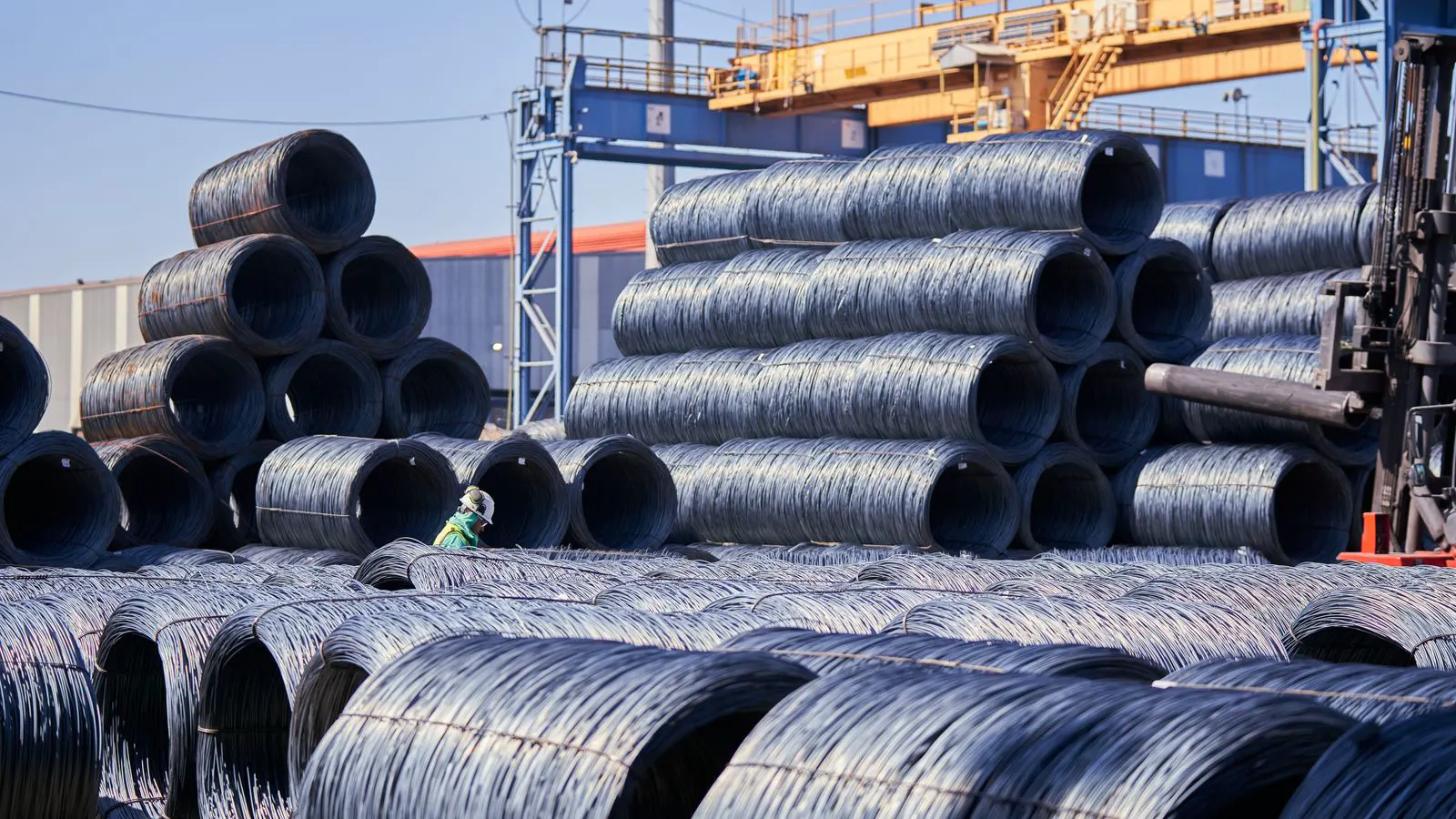
To specify carbon steel coil for container fabrication, match the grade to load requirements, choose the right gauge for stiffness, and set width to minimize waste. Verify the mill certificate and edge preparation before purchase.
- Match coil grade to structural load and corrosion exposure.
- Choose thickness based on deflection limits and panel stiffness.
- Set coil width to reduce trim waste during fabrication.
- Verify mill test reports for chemical and mechanical properties.
- Confirm edge preparation and surface condition before cutting.
Define the Container Load and Service Environment
Before selecting a carbon steel coil, establish the mechanical demands of the finished container. A container used for general dry cargo carries different loads than a reefer box that must withstand temperature cycling and heavier internal framing. Identify the maximum static weight per panel, the dynamic loads during stacking, and the expected handling method.
The service environment drives the grade choice. Containers stored in coastal areas or used for chemical transport face higher corrosion risk. General purpose dry containers often use carbon grades with modest manganese content, while marine or reefer applications may require higher strength or added alloying. If the container will see extreme cold or heat, consider how the coil grade behaves outside standard temperature bands.
Start by defining the specific cargo type. A box used for electronics will face different vibration and shock loads than one used for agricultural products. Electronic cargo requires rigid framing to prevent shifting, which increases the bending moment on corner posts. Agricultural products often require higher stacking capacity to accommodate palletized loads that shift during transport. Determine if the container will be used for double stacking. If so, the top panels must support not only the cargo inside but also the weight of the container stacked above. This changes the required yield strength significantly.
Consider the handling method as well. A container lifted by forklifts or cranes experiences dynamic shock loads. The corners and base frame undergo the highest stress during these maneuvers. If the container is driven on a chassis, the floor structure must resist the torsional forces generated by braking and turning. A container used in a reefer unit will also experience thermal stress. The internal refrigeration system creates temperature differentials between the interior and the exterior. This causes the steel to expand and contract. Over time, these cycles can lead to fatigue cracking at weld joints if the material lacks sufficient ductility.
Select the Carbon Grade for Strength and Weldability
Steel coil specifications for container fabrication usually center on a small set of carbon grades. Low carbon steel offers easy welding and good formability, making it suitable for outer skins and non-critical framing. Higher carbon grades increase yield strength, allowing thinner sections for the same load capacity.
Weldability is the primary constraint. Container fabrication relies heavily on TIG and MIG welding. Grades with high carbon content are harder to weld and can develop cracks if preheat is not managed. For most container shells, a medium carbon grade strikes a balance between strength and weldability. If the structure uses riveted or bolted joints in some areas, you may select a stronger grade for those zones without affecting the entire coil.
Low carbon grades, often defined by a carbon content below 0.20 percent, are the standard for long seam and short seam construction. They are forgiving during welding and allow for higher welding speeds. This efficiency is critical when producing containers in volume. However, their lower yield strength means you need thicker sections to achieve the same stiffness as a higher strength grade. This increases weight and material cost.
Higher carbon grades, with carbon content above 0.20 percent, offer better strength-to-weight ratios. They are often used for corner posts and heavy structural beams where weight savings are prioritized over welding ease. However, these grades require careful heat input control. Excessive heat during welding raises the carbon content in the heat-affected zone, reducing ductility. This makes the weld region brittle and prone to cracking, especially in cold weather.
For reefer containers, where internal framing must support the weight of the refrigeration unit and the cargo, a higher strength grade is common. The added strength allows for lighter framing, which reduces the overall tare weight. This is beneficial because shipping rates are often calculated based on weight. However, the welder must be trained to handle these materials. Preheating and post-weld heat treatment may be required to prevent cracking.
If the container uses bolted joints in some areas, you may select a stronger grade for those zones without affecting the entire coil. This approach allows you to optimize material use. For example, the outer skin can be made from a low cost grade, while the internal cross braces are made from a higher strength grade. This hybrid approach reduces cost while maintaining structural integrity.
Choose Thickness for Stiffness and Weight
Thickness is not just about strength. It controls panel deflection and the weight of the finished container. A thin coil may look stiff in the sample, but a large skin panel can flex under its own weight or during transport if the gauge is too low.
The common practice is to calculate the required section modulus for the expected load, then apply a safety factor. For container skins, the thickness must resist denting from stacking and handling. For corner posts and cross braces, the thickness must resist bending under the combined weight of the cargo and the container itself. Heavier gauges reduce the risk of local yielding but increase the overall weight, which affects shipping rates and axle loads.
Thickness selection is a balance between stiffness, weight, and cost. A thicker panel resists deflection better, but it adds to the tare weight. For a container used in air freight, weight is a primary concern. A reduction of even a small percentage in tare weight can significantly reduce shipping costs. Therefore, designers often look for the thinnest gauge that meets the stiffness requirements.
For outer skins, the thickness must be sufficient to resist denting. A dent in the outer skin can compromise the structural integrity of the container. It can also affect the appearance, which is important for customers who inspect the container before use. A typical thickness for outer skins is in the range of 1.5 to 2.0 mm, depending on the panel size and the expected load. For inner skins, the thickness can be slightly less, as they do not face the same external forces.
For corner posts and cross braces, the thickness must be sufficient to resist bending and buckling. These members are critical for the structural integrity of the container. A thin section can buckle under compressive loads, leading to catastrophic failure. The thickness of these members is often determined by the maximum stacking load and the height of the container. A taller container requires thicker corner posts to resist the bending moment caused by the weight of the cargo.
Heavier gauges reduce the risk of local yielding but increase the overall weight, which affects shipping rates and axle loads. When selecting a thickness, consider the total weight of the container. A heavier container may exceed the weight limits of certain trucks or ships. This can restrict the use of the container to certain routes or modes of transport. Therefore, weight is a key factor in thickness selection.
Set the Coil Width to Minimize Waste
Coil width is a cost driver that affects fabrication efficiency. A wider coil reduces the number of joints per panel, which saves labor and improves structural continuity. However, a coil that is too wide for your cutting table or press brake creates long offcuts that are difficult to store and sell as scrap.
Match the coil width to your fabrication layout. If your standard panel width is a specific dimension, select a coil width that is an integer multiple of that width plus a small allowance for trim. This reduces scrap and simplifies inventory. If your production line handles multiple container types, a mid-range width often offers the best compromise. Check the maximum width your shearing equipment can handle before ordering a wider coil.
Coil width directly impacts material utilization. A wider coil allows for larger panels with fewer joints. This reduces the number of welds, which saves labor and improves the structural continuity of the panel. Fewer joints also reduce the risk of weld defects. However, a wider coil requires larger cutting tables and press brakes. If your equipment cannot handle the wider coil, you will be forced to cut the panels in multiple pieces, which increases waste and labor.
A common mistake is to order a coil width based on the width of the panel, without considering the cutting and forming process. For example, if your panel width is 1000 mm, a coil width of 1000 mm is not sufficient. You need to account for trim, which is the material removed during cutting. A typical trim allowance is 5 to 10 mm per edge. Therefore, a coil width of 1010 mm is a better choice. If your production line handles multiple container types, a mid-range width often offers the best compromise. For example, a coil width of 1200 mm can be used for panels of 600 mm, 800 mm, or 1200 mm, with minimal waste.
Check the maximum width your shearing equipment can handle before ordering a wider coil. Some shearing machines have a maximum width limit. If you order a coil wider than this limit, you will not be able to cut it efficiently. You will have to reduce the width by cutting it into smaller pieces, which defeats the purpose. Therefore, it is important to match the coil width to your equipment capabilities.
Specify Surface Condition and Edge Preparation
The surface condition of the carbon steel coil affects the final appearance and the need for additional finishing. Hot rolled coil has a scale surface and is the most economical option for structural containers where the exterior will be painted. Cold rolled coil offers a smoother surface and better dimensional accuracy, which is useful for visible panels or applications requiring tighter tolerances.
Edge preparation is equally important. Cut edges are often left as-is, but some fabrication processes benefit from a sheared or planed edge. A rough edge can cause paint to bead or peel at the joint. Specify the edge condition in the purchase order to avoid surprises during assembly.
Hot rolled coil is the standard choice for container fabrication. It is produced by rolling the steel at high temperatures, which creates a scale surface. This scale is removed during the manufacturing process, but it leaves a rough texture. Hot rolled coil is cheaper than cold rolled coil because it is easier to produce. It is also stronger in terms of yield strength, which is beneficial for structural applications. However, the surface is not smooth, so it requires more preparation before painting. The scale must be removed, and the surface must be cleaned to ensure good paint adhesion.
Cold rolled coil is produced by rolling the steel at room temperature, which results in a smoother surface and better dimensional accuracy. It is more expensive than hot rolled coil but is suitable for applications where appearance and tolerance are important. For example, if the container is used for high-value cargo, the exterior appearance may be a concern. Cold rolled coil can provide a smoother finish, which reduces the need for surface preparation. However, cold rolled coil is thinner and less strong than hot rolled coil, so it may not be suitable for structural members.
Edge preparation is a critical step in the fabrication process. The edge of the coil is often left as-is, but this can lead to problems. A rough edge can cause paint to bead or peel at the joint. It can also make it difficult to fit the panel to the frame. Therefore, it is important to specify the edge condition in the purchase order. A sheared edge is clean and straight, which is ideal for welding and painting. A planed edge is even smoother, which is beneficial for applications where the edge is visible.
Verify the Mill Test Report and Certification
Every coil shipment should come with a mill test report. This document confirms the chemical composition and mechanical properties of the steel. For container fabrication, the report must match the grade you specified. A discrepancy in carbon content or yield strength can affect welding behavior and load capacity.
Check the certification level. Some mills provide a basic quality certificate, while others provide a more detailed test report that includes heat number and test method. For critical applications, request the detailed report before accepting the shipment. The heat number allows you to trace any quality issues back to the specific production run.
The mill test report is a critical document in the supply chain. It provides proof that the steel meets the specified requirements. For container fabrication, the report must match the grade you specified. A discrepancy in carbon content or yield strength can affect welding behavior and load capacity. For example, if the carbon content is higher than specified, the steel may be harder to weld. If the yield strength is lower than specified, the container may not meet the load requirements.
Check the certification level. Some mills provide a basic quality certificate, which is a standard document that confirms the grade and basic properties. Others provide a more detailed test report, which includes the heat number, test method, and actual test results. For critical applications, it is important to request the detailed report before accepting the shipment. The heat number allows you to trace any quality issues back to the specific production run. This is particularly important if a defect is found during fabrication. You can use the heat number to identify the specific mill lot and contact the mill for a solution.
The detailed test report should include the chemical analysis and mechanical test results. The chemical analysis confirms the carbon, manganese, silicon, and other alloying elements. The mechanical test results confirm the yield strength, tensile strength, and elongation. These values are critical for ensuring that the steel meets the design requirements.
Plan the Cutting and Forming Process
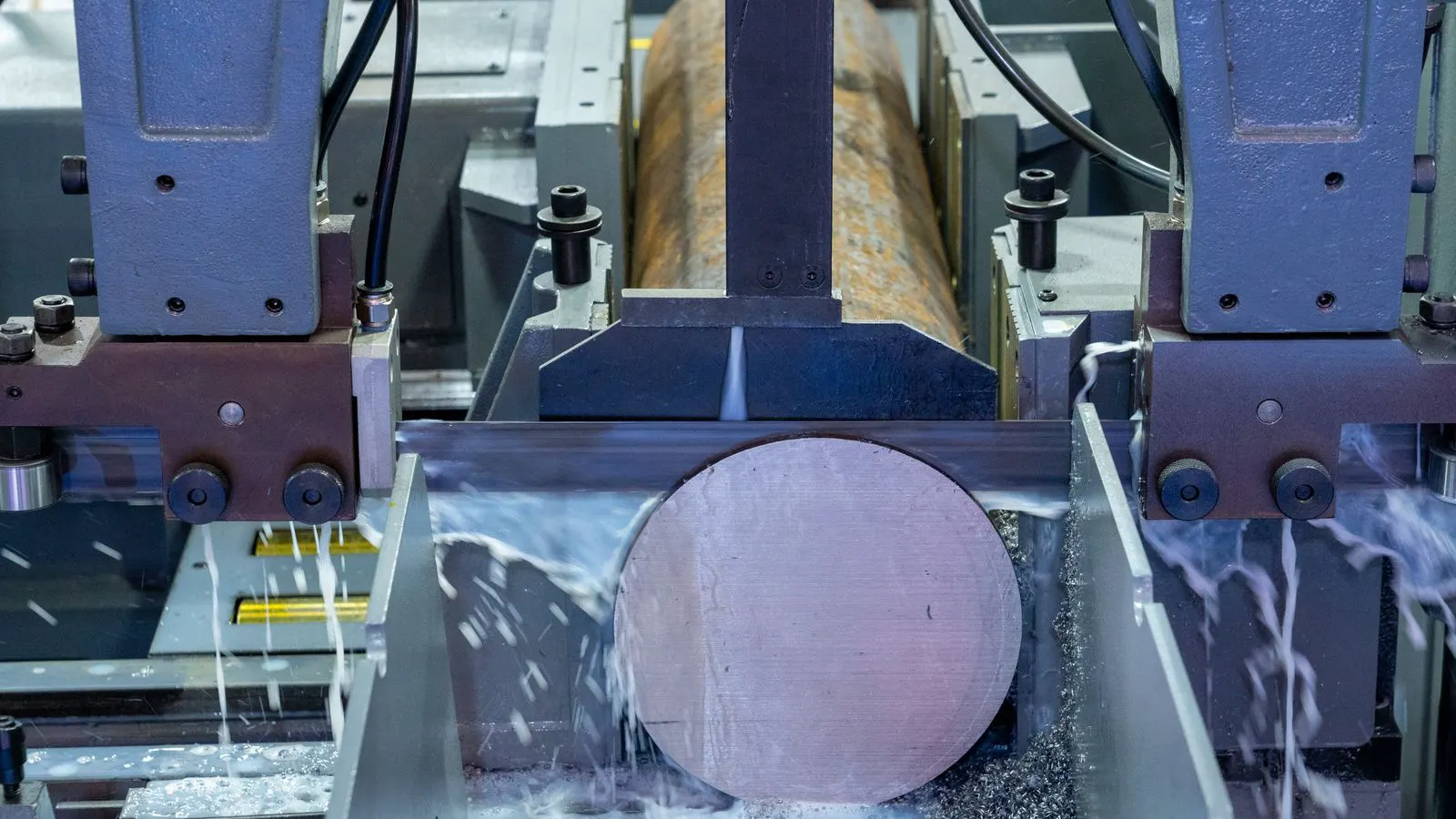
The way you cut and form the coil determines whether your specification is practical. A coil that is too thick for your shearing line will require slower cuts and more frequent blade changes. A coil that is too narrow for your press brake will limit the maximum bend radius you can achieve without cracking.
Map out your fabrication sequence. For container skins, you may use a shear for straight cuts and a laser or plasma cutter for complex shapes. For framing, you may roll the coil into a profile or use a press brake for angle bends. Test a small section of the coil before full production to confirm it behaves as expected during bending and welding.
The cutting and forming process is a key part of the fabrication workflow. The way you cut and form the coil determines whether your specification is practical. For example, if you select a coil that is too thick for your shearing line, you will have to reduce the cutting speed and change the blades more frequently. This increases the cost of production and reduces the efficiency of the line.
For container skins, you may use a shear for straight cuts and a laser or plasma cutter for complex shapes. A shear is a mechanical cutting process that uses two blades to cut the material. It is fast and cheap, but it is limited to straight cuts. A laser or plasma cutter can cut complex shapes, but it is slower and more expensive. Therefore, it is important to use the right tool for the job.
For framing, you may roll the coil into a profile or use a press brake for angle bends. Rolling is a process where the coil is bent into a circular or rectangular shape. It is suitable for corner posts and tubes. A press brake is a tool that bends the material into an angle. It is suitable for brackets and other flat members. The choice between rolling and bending depends on the shape of the member and the production volume.
Test a small section of the coil before full production to confirm it behaves as expected during bending and welding. This is a critical step in the process. By testing a small section, you can identify any issues with the material or the process. For example, if the coil cracks during bending, you may need to change the bend radius or the preheat temperature. If the weld cracks, you may need to change the welding parameters or the grade of the steel.
Common Mistakes in Specifying Carbon Steel Coil
- Ordering a coil width that does not match the panel layout, leading to excessive scrap.
- Selecting a high carbon grade for a panel that requires extensive welding, causing cracks.
- Ignoring the edge condition, which leads to paint defects at the joint.
- Using a coil without a mill test report, which makes quality verification impossible.
- Choosing a thickness based on cost alone, which results in panels that flex under load.
These mistakes are common in the industry, but they can be avoided with careful planning and attention to detail. By addressing these issues, you can ensure that the coil specification is practical and cost-effective.
Final Verification Before Purchase
Before releasing the purchase order, run a final check against the design drawings. Confirm the grade, thickness, width, and surface condition. Verify that the mill test report is included in the shipment terms. Check that the coil diameter is compatible with your uncoiling equipment. A small error in the specification can halt production or require rework.
Review the delivery terms with the supplier. Confirm the loading method and the protection of the coil during transit. Rust on the surface of the coil can cause issues during cutting and painting. Ensure the supplier offers a reasonable window for inspection after delivery.
The final verification step is a crucial part of the purchasing process. It ensures that the coil meets the design requirements and is suitable for the fabrication process. A small error in the specification can halt production or require rework. For example, if the grade is incorrect, the steel may not meet the load requirements. If the thickness is too thin, the panel may flex under load. If the width is too narrow, you may have to cut the panel into multiple pieces, which increases waste.
Review the delivery terms with the supplier. Confirm the loading method and the protection of the coil during transit. The coil should be loaded securely to prevent damage during transport. It should also be protected from moisture and corrosion. Rust on the surface of the coil can cause issues during cutting and painting. Ensure the supplier offers a reasonable window for inspection after delivery. This allows you to check the coil for any defects or discrepancies.
Conclusion
Specifying carbon steel coil for container fabrication is a matter of matching the material to the structural and manufacturing requirements. The grade must handle the loads and the environment. The thickness must provide stiffness without excessive weight. The width must fit the fabrication line. The surface and edge conditions must support the finishing process. Verify the documentation and the physical coil before accepting the shipment.
Frequently asked questions
Which carbon steel coil grade is best for general purpose containers?
A medium carbon grade is typically used for general purpose containers because it balances strength, cost, and weldability. The exact grade depends on the specific load requirements and corrosion environment.
How does coil width affect container fabrication cost?
Coil width affects cost through scrap reduction and labor. A width that matches the panel layout reduces offcuts and the number of weld joints, which lowers both material and labor costs.
Can hot rolled coil be used for container skins?
Yes, hot rolled coil is commonly used for container skins where the exterior will be painted. It is more economical than cold rolled coil and provides adequate strength for structural panels.
What should I check on the mill test report?
Check the chemical composition, yield strength, and elongation values. Ensure the heat number matches the coil being shipped and that the report confirms the grade specified in the purchase order.
Is there a maximum thickness for container fabrication?
There is no universal maximum thickness, but practical limits are set by the equipment used for cutting and bending. Very thick sections require specialized tools and may limit the bending radius.